


Inside This Issue
Long read –
– Lessons from 2025
– The cost of uncertainty
Visuals & Videos –
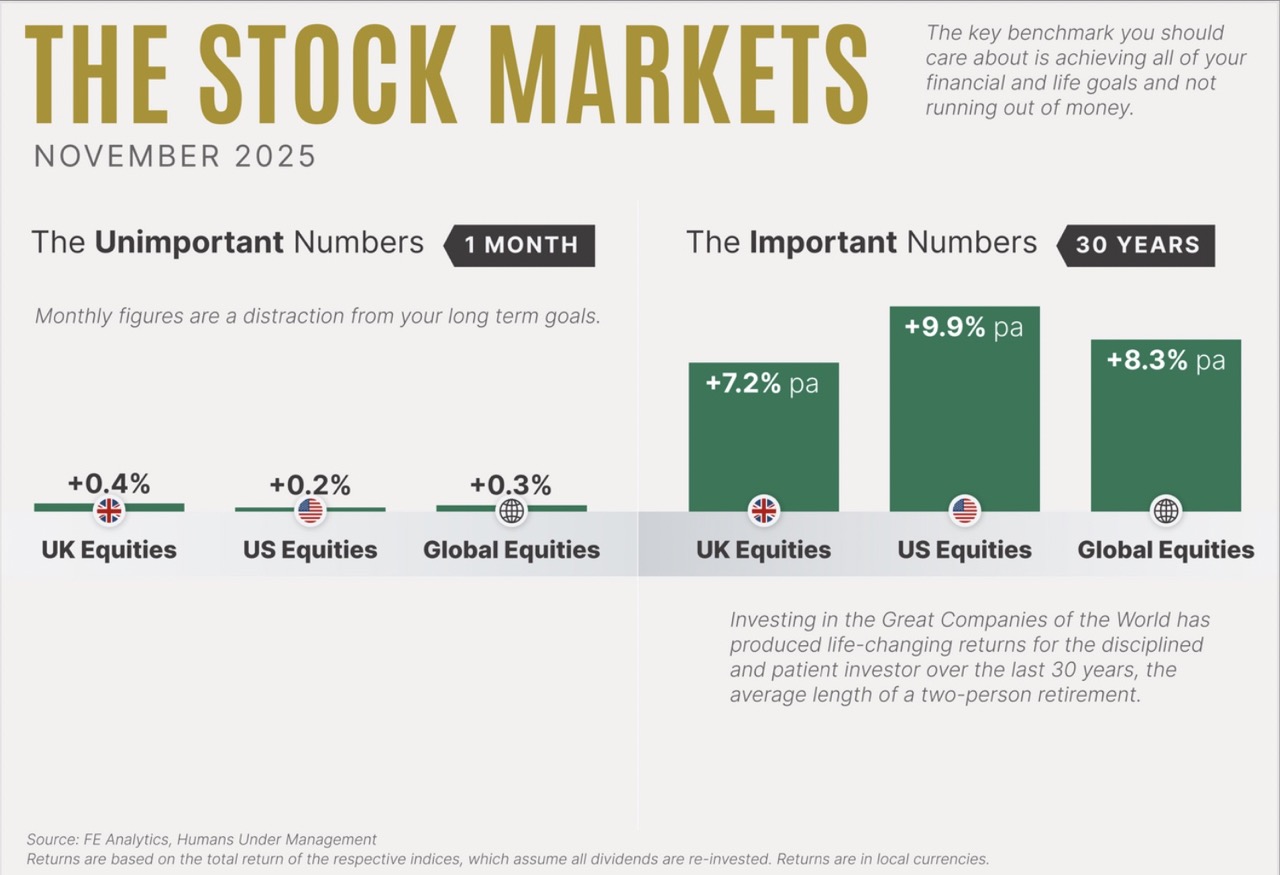
– Market numbers
– Where Love Lives
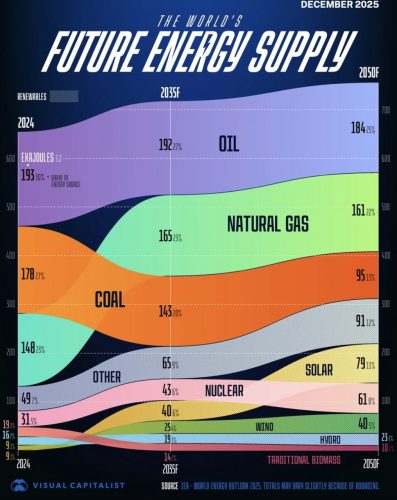
Future of Energy Supply

Welcome to the final newsletter of the year.
2025 has been another year of twists and turns—both in markets and in life. In this month’s feature article, we explore the key lessons we can take forward.
Even after decades in this profession, there’s always something new to learn.
The festive season is now in full swing. Whether you managed to secure the elusive M&S Tom Kerridge Beef Wellington or are sticking with the traditional spread, we hope your celebrations are full of joy (and perhaps a few extra calories!).
A small seasonal tip: if you’re planning to hit the gym in January, expect company—many will be trying to undo December in a single week.
Enjoy this month’s newsletter, packed with ideas and links we hope you’ll find interesting. As always, if you’d like to discuss how any of these insights apply to your own plans, we’re here to help.
Lessons from 2025
As we enter December—with one month still to go in 2025—there is already much for investors to reflect on.
The year began with political theatre: the inauguration of President Trump, following a wave of elections that reshaped leadership across the globe. What followed was a period of uncertainty around U.S. tariffs, sparking a month of market turbulence.
Elsewhere, peace agreements began to de-escalate conflicts that dominated headlines for years, while the AI revolution continued to transform industries and capture imaginations.
Despite moments of genuine chaos—including a sharp market decline that saw global equities fall by nearly 19%—2025 looks set to deliver another year of above-average returns for equity investors, following two strong years in 2023 and 2024.
We know from conversations with clients that March and April were uncomfortable months.
These periods of volatility are never pleasant, but they remind us of the patience and discipline required for long-term success.
Those who stayed invested through the anxiety of early April have been rewarded.
While markets are already looking ahead to 2026, there is value in pausing to reflect. The events of this year offer three lessons worth carrying forward:
1. Overvalued Markets Can Still Grow
At the start of 2025, many commentators warned that global markets looked expensive. Yet markets—collections of the world’s great businesses—continued to deliver returns. Valuation tells us little about timing.
It’s tempting to wait for a “better entry point” or reduce exposure when prices seem stretched. But markets can remain expensive for years while still rewarding patient investors. Timing the market means being right twice: when to exit and when to re-enter. History shows this is a game very few win.
2. Knowing What Will Happen Doesn’t Tell You How Markets Will React
The tariff announcements in April were a striking reminder of the limits of foresight. On 2 April, sweeping tariffs were confirmed—news widely expected. Markets, already declining, fell sharply. Yet just six days later, with uncertainty at its peak, markets quietly found a bottom and began to recover.
Those who “knew” tariffs were coming had no advantage. The information was public. What nobody could predict was how and when markets would respond.
This is why we focus on planning, not prediction.
3. Long-Term Planning Beats Short-Term Prediction
The AI revolution is reshaping industries in ways that are hard to imagine. Five years from now, daily life will look different—but human ingenuity will adapt, as it always has.
The knock-on effects for markets are unknowable. But uncertainty is not new; it is the permanent condition of investing. Fortunately, the game we play is long-term. A sound financial plan—appropriate asset allocation, a margin of safety, and the discipline to stay invested—remains the foundation for success.
2025 has reinforced a timeless truth: we cannot predict, but we can prepare. These lessons, earned through a year of turbulence, will steady us when markets next test our resolve.
The Cost of Uncertainty Post-Budget Reflections
Uncertainty is the silent tax on wealth. It doesn’t appear on a balance sheet, yet its impact can be profound—eroding opportunities, compounding risks, and creating stress that clouds judgment and leads to inaction.
In the run-up to the Autumn Budget, speculation was rife: income tax hikes, sweeping inheritance tax reforms, and radical changes to capital gains. For high-net-worth families and business owners, these weren’t abstract headlines—they were potential shocks that could reshape financial plans overnight.
So, what actually happened?
The Chancellor resisted headline-grabbing moves like raising income tax or VAT rates, but the Budget still delivered one of the largest medium-term tax increases in recent history—largely through “stealth” measures and targeted reforms:
*Income Tax & NIC Thresholds Frozen until 2031, extending fiscal drag for another three years. This alone will pull millions more into higher tax bands over time.
Dividend Tax Rates rise by 2 percentage points from April 2026 (basic rate to 10.75%, higher rate to 35.75%).
*Property & Savings Income Tax increases by 2 percentage points from April 2027 (basic rate 22%, higher rate 42%, additional rate 47%).
Inheritance Tax thresholds remain frozen until 2031, while the £1m cap on Agricultural & Business Property Relief stays—but now becomes transferable between spouses from April 2026. Above £1m, relief drops to 50%.
Unused pension funds will fall into the IHT net from April 2027, and salary-sacrifice
pension contributions above £2,000 lose NIC relief from April 2029.
Capital Gains Tax: No headline rate increase, but CGT relief on disposals to Employee Ownership Trusts cut from 100% to 50%, effective immediately. Anti-avoidance rules tightened for share reorganisations.
*New “Mansion Tax”: Annual surcharge from April 2028 on properties in England worth £2m+ (£2,500 rising to £7,500 for £5m+ homes).
Corporation tax stays at 25%, but writing-down allowances fall from 18% to 14% in 2026. A new 40% First-Year Allowance for plant and machinery starts January 2026.
Many feared sweeping changes to lifetime gifting rules, SDLT, or a wealth tax—none of these materialised. But the cumulative effect of freezes and targeted hikes is clear: the tax burden will rise to 38% of GDP by 2030, the highest in modern times.
For Scottish Tax Residents it is important to remember a number of the changes do NOT apply in Scotland. In summary-
Income Tax Threshold Freeze: UK rates freeze until 2031 does not apply to Scottish earned income (fully devolved). Scottish rates and bands will be set in the Scottish Budget (January 2026).
“Mansion Tax”: Annual surcharge on homes worth £2m+ applies only in England (Council Tax is devolved).
Property Income Rates: UK changes (22%, 42%, 47%) apply in England, Wales &
Northern Ireland. Scotland will set its own property income rates.
Why This Matters
The real danger isn’t just the announced measures—it’s the behavioural impact of uncertainty. When rules shift constantly, confidence erodes. Families delay succession planning. Business owners postpone investment. And opportunities slip away.
At Cadboll Wealth, we can’t predict every policy twist, but we can help you plan for resilience. Through scenario modelling, proactive tax planning, and strategic structuring, we turn speculation into strategy—so decisions are made from a position of strength, not urgency
Cadboll Chronicles
December has continued much as November finished - too many lunch meetings, too much coffee, and not enough sleep! Much time has been set establishing the systems and processes which will allow the business to continue to grow whilst keeping clients and staff safe. Building the foundations for years to come. By far the most exciting development though has been the start of a new employee and old friend - Sharon Mitchell who joins as administrator. Team meetings can now be held out loud instead of inside my head!

Rational Optimism
The media is not a friend of the disciplined and patient investor. Ignoring the key determinants of lifetime investor returns, the media focuses on short-term returns, market predictions, and negative news.
We present the following as an antidote to the onslaught of negative news:
The First New Subsea Habitat in 40 Years Is About to Launch
In Senior Homes, AI Technology Is Sensing Falls Before They Happen UK Neuralink Patient Uses Thought to Control Computer
We hope you’ve enjoyed this edition of the Cadboll Wealth Newsletter. Please let us know what struck a cord (or didn’t) and as always, if there is anything we can help with, please let us know.
Doug & the Team at Cadboll Wealth